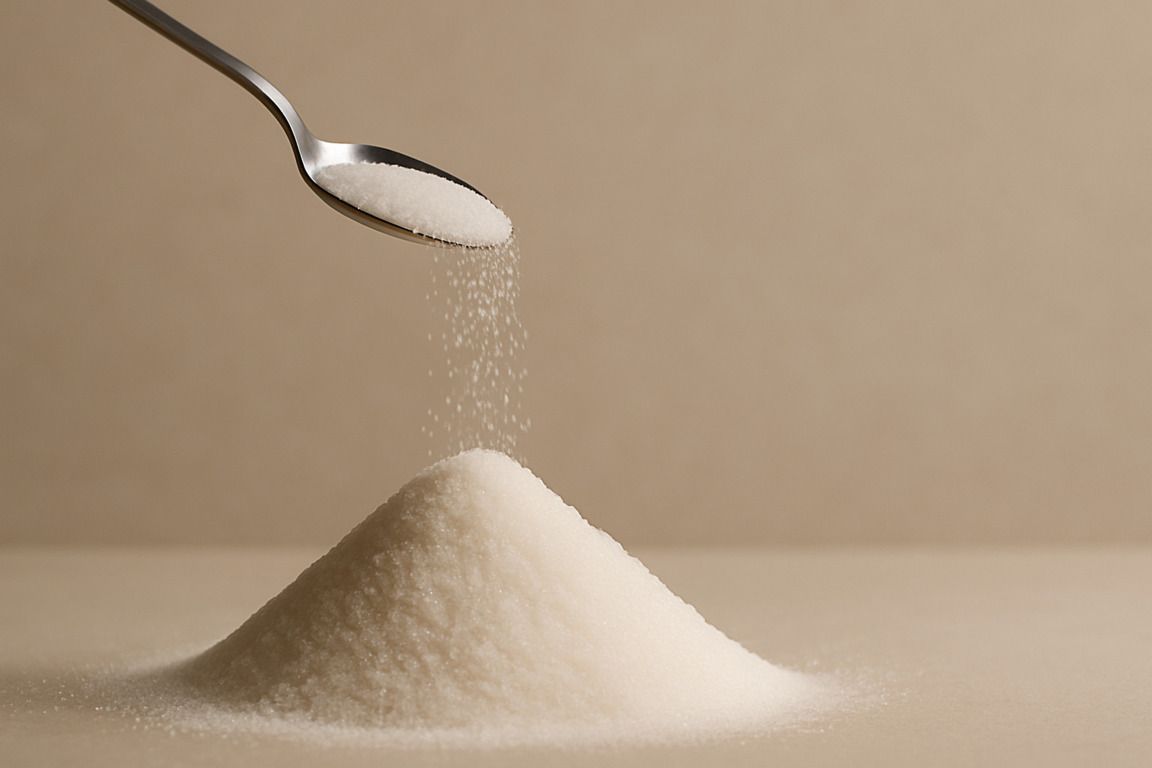
Sugar isn't just “the sweet stuff”
When you think about sugar, you probably picture candy, soda or dessert. But it's present in a huge number of products that don't necessarily taste sweet: sauces, industrial breads, yogurts, cereals, cold cuts, dressings and even “healthy” products.
In fact, a study by the World Health Organization reveals that more than 70% of the sugar we consume is “hidden” in processed foods.
What does sugar do to your body?
Excessive sugar consumption doesn't just affect body weight. It affects multiple body systems, even if you're lean:
- Energy spikes and crashes: Sugar causes rapid rises in blood glucose, followed by equally sharp drops, which produce fatigue, irritability and more cravings.
- Chronic inflammation: Overdoing sugar can trigger inflammatory processes in the body, linked to cardiovascular disease, type 2 diabetes and certain types of cancer.
- Increased abdominal fat: Excess sugar, especially in liquid form (like juices or soda), is associated with greater visceral fat accumulation.
- Cellular aging: A study published in The American Journal of Clinical Nutrition found that high sugar intake accelerates glycation, a process that damages collagen and elastin, both key to skin health.
So why is it so hard to quit?
Because sugar activates the same reward centers in the brain as some drugs. When we consume it, we release dopamine, which creates a pleasurable… and often addictive sensation.
According to research in the Journal of Neuroscience, this effect is especially strong in moments of stress, anxiety or tiredness. That's why we often reach for “something sweet” when we're feeling low.
How to cut back on sugar (without suffering through it)
It isn't about eliminating it completely or living on restrictions. The goal is to reduce your intake intelligently and gradually:
- Read labels: Many “light” or “healthy” products hide large amounts of sugar. Look for the hidden names (corn syrup, maltodextrin, sucrose, etc.).
- Don't swap in sweeteners without thinking: Even though they have no calories, they can keep your sweetness threshold high. The idea is to retrain your palate, not “trick” it.
- Add real, nutritious snacks: Fresh fruit, nuts, plain yogurt with cinnamon or oats with banana are sweet options with no added sugar.
- Cook more at home: That way you control what you eat and you can sweeten naturally (dates, unsweetened compotes, fruit zest, etc.).
- Reduce gradually: If you're used to sweet flavors, lower the amount in your drinks or recipes little by little. Your palate adapts faster than you think.
Conclusion: sugar isn't poison, but it isn't innocent either
You don't need to fear it, but you do need to respect it. Knowing where it hides, how it acts in your body and how to moderate it gives you the power to make better decisions for your health.
Cutting back on sugar doesn't mean giving up pleasure — it means learning to find it in real food, in steady energy, and in feeling good every day.