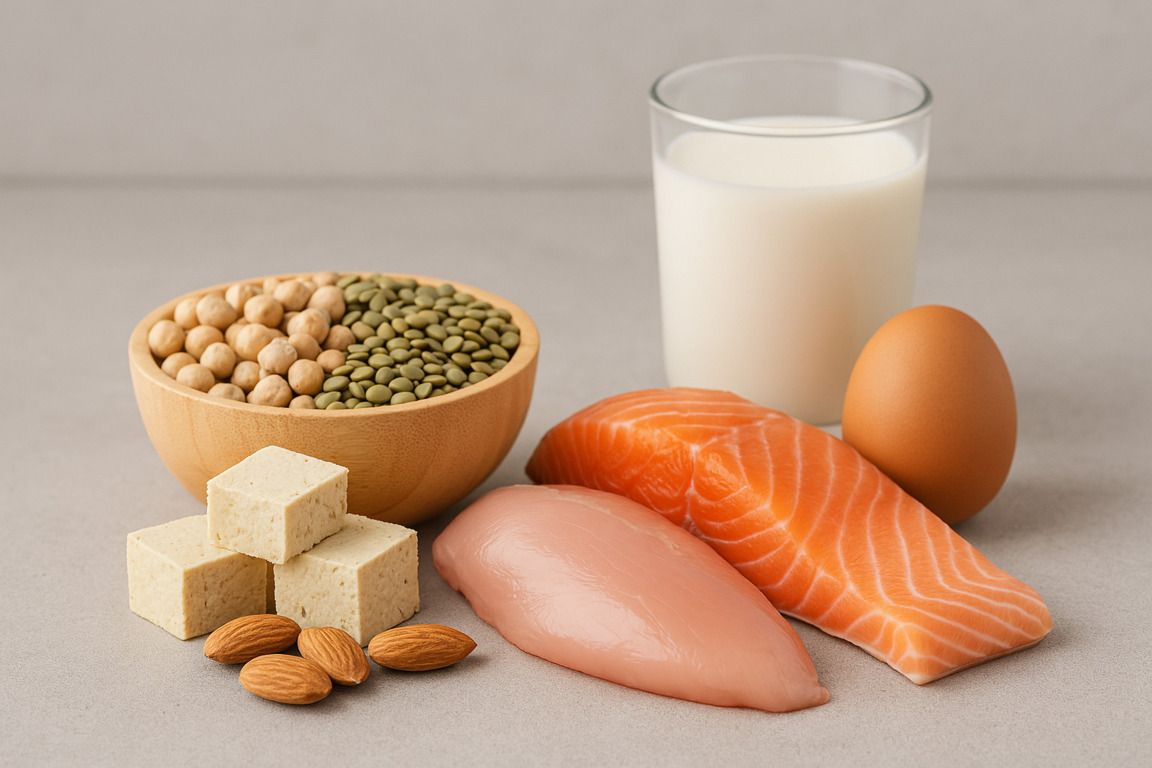
Not all protein is equal: biological quality and absorption
Both plant and animal proteins are made of amino acids, but they differ in their “profile” and in how the body absorbs them. Animal proteins — like those in meat, eggs or dairy — are considered “high biological value” because they contain all the essential amino acids in proportions that are optimal for the human body. Their digestibility is also very high.
Plant proteins — like those in legumes, grains or nuts — can be more limited in one or more essential amino acids (for example, methionine in legumes or lysine in grains). However, that doesn't make them “inferior”: by combining plant sources appropriately across the day (like rice with lentils), you can achieve a complete intake.
A study published in Nutrients (2021) confirms that, with proper planning, vegetarian or vegan diets can fully cover protein needs, even in athletes.
Which is better for building muscle?
The short answer: both can work, but with nuances.
Animal protein has an initial advantage in terms of leucine, an amino acid key to triggering muscle protein synthesis. That translates into a stronger anabolic response, something demonstrated by research such as that in the Journal of the International Society of Sports Nutrition.
But that doesn't mean plant proteins don't work. Recent studies show that if you hit the total recommended protein intake and adjust for quality (for example, using combined plant protein supplements, like rice + pea), the results in strength and muscle mass can be comparable.
And if your goal is health and sustainability?
That's where plant proteins start to shine. They usually come with fiber, antioxidants and less saturated fat. Their environmental impact is also considerably lower. A report from the FAO (Food and Agriculture Organization of the United Nations) notes that meat production generates more greenhouse gas emissions and requires more water and land than producing legumes or grains.
In health terms, a review published in JAMA Internal Medicine found that replacing animal protein with plant protein (especially processed red meat) is associated with lower risk of cardiovascular disease, type 2 diabetes and certain types of cancer.
The middle ground: why not both?
You don't have to pick a side. Many people benefit from combining sources: meat or eggs in some meals, tofu, lentils or tempeh in others. The key is variety, moderation and, above all, adapting your choice to your specific needs: are you looking to build muscle, improve your cardiovascular health, reduce your environmental footprint?
Conclusion: the best protein is the one that fits you
There's no universally “best” protein source. It depends on your overall diet, your values, your budget, your physical goals and your health. What matters is that you inform yourself, learn to read labels, and make sure you're hitting the right quantity and quality of protein for you.
Because at the end of the day, it isn't only what you eat, but how you do it, with what purpose, and how sustainable that habit can be over time.